Ayrstone Productivity is out of business; we stopped operations on June 30. We still have some leftover products for sale on Ebay.com; see user “ayrstoneproductivity” to see what we have left and to buy the remaining Ayrstone products, as well as things like Ethernet cables.
I have moved the Ayrstone.com website and this blog to a (much) less-expensive server, so the information there will continue to be available, including the troubleshooting and support information. AyrMesh.com will probably still be available until the end of August, but it will just disappear. Support.ayrstone.com (our Zendesk support platform) will also disappear, and there will be no one to answer any questions.
The troubleshooting and debugging information is on Ayrstone.com; if you are having trouble making the transition from AyrMesh.com to manual configuration, there are pretty comprehensive instructions available. One warning: read the directions FULLY and follow them CAREFULLY for best results.
What happened at the end of June
At the end of June, we sent a small script to all the AyrMesh devices that saved their current configuration and then turned off the checkin to AyrMesh.com. Unfortunately, I messed it up and not all devices saved their configuration, which caused them to revert to the default configuration when they rebooted. I corrected the script, but many devices were affected. You can re-initialize the devices as long as AyrMesh.com is still running (at least through August, 2026) and recover them that way. Devices will check in to AyrMesh.com once, then drop off fully configured for manual configuration. You may not need to ever log into it again; if you do, you’ll use your AyrMesh.com username and password. IMPORTANT: if your AyrMesh.com username or password, or your SSID or passkey contain non-alphanumeric characters, change those fields before you click “submit” or the device may corrupt those fields.
Philosophical notes
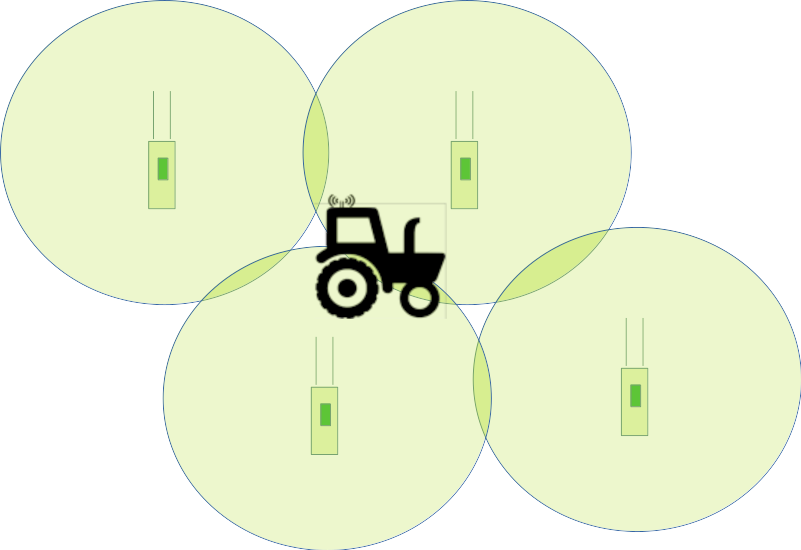
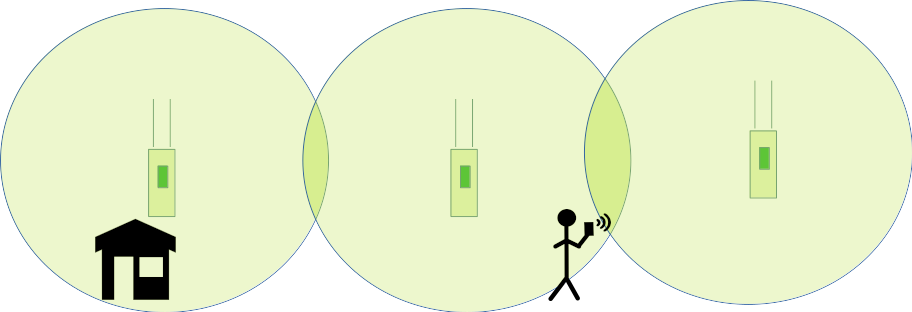
We started this company because we could see the increasing role that data was having, even in 2010, in farming. The initial idea for this came when I had been working on ways to get RTK corrections quickly and reliably out to equipment in the field with the old “Freewave” 900 MHz. radios. There were already rumblings about the “Internet of Things,” which relies on good, widespread wireless access. I felt that meshing WiFi was a good, cheap, simple way to get wireless coverage across a farm for RTK, and it would have many other useful applications. I tested the idea and was even more convinced that it was a good approach; in a relatively radio-quiet environment the range of a “tuned” WiFi radio was surprising. Nothing in the following 16 years has dampened that belief – and I still believe AyrMesh delivered a good, inexpensive solution to spreading a wireless network across a farm.
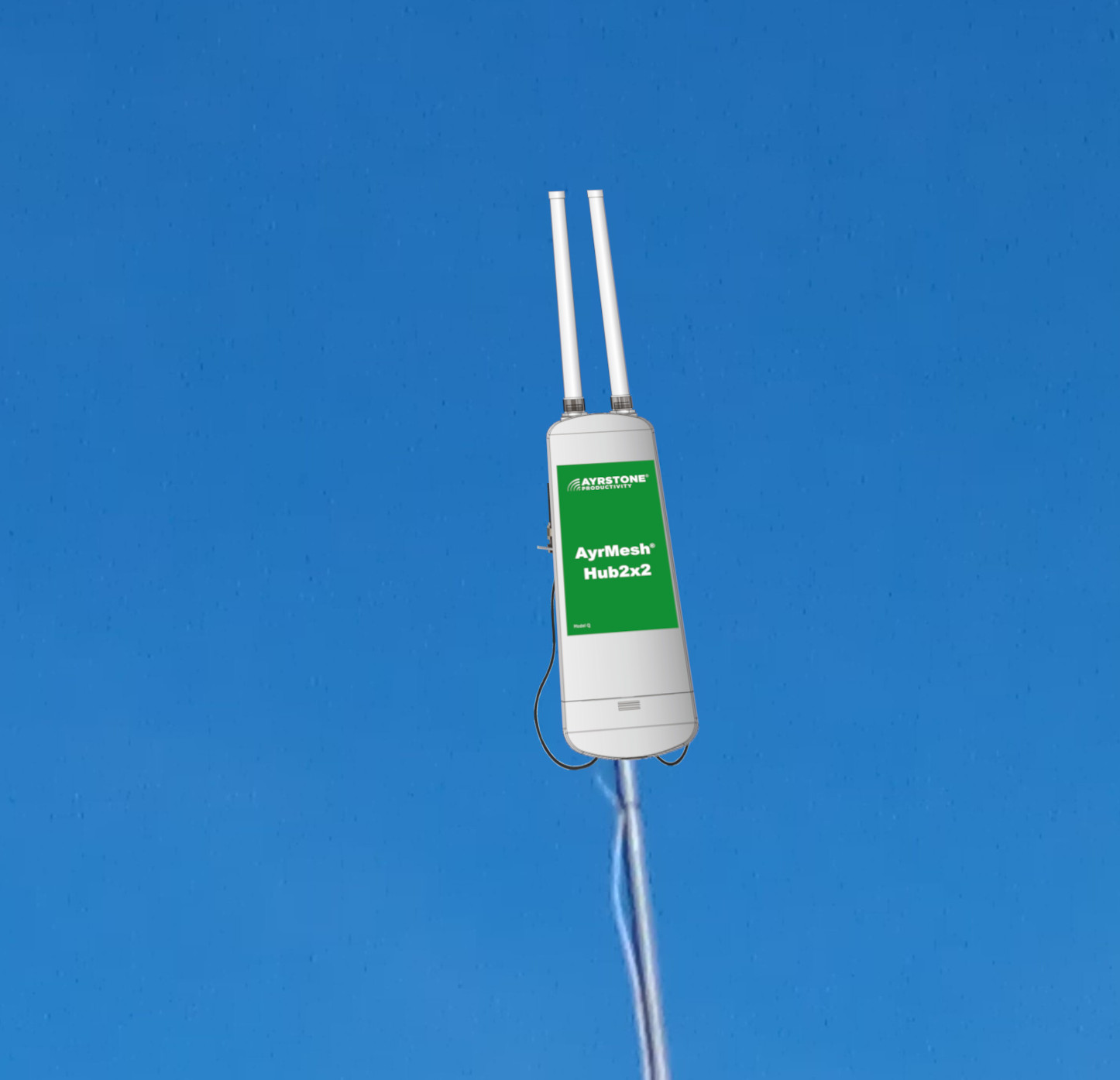
There were problems, and they will remain for anyone who decides to try following in our footsteps. Installing the Hubs (access points) “up high and in the clear,” as we put it, is a challenge for a lot of users. There were a lot of folks who tried mounting the Hub on the side of the house and then were disappointed when the range was not what they expected. There were people who connected Hubs to networks that were not working right (or used the Hubs to extend signal to devices that “broke” the network), and then wondered why the Hub kept breaking down. I published my “Everything You Need to
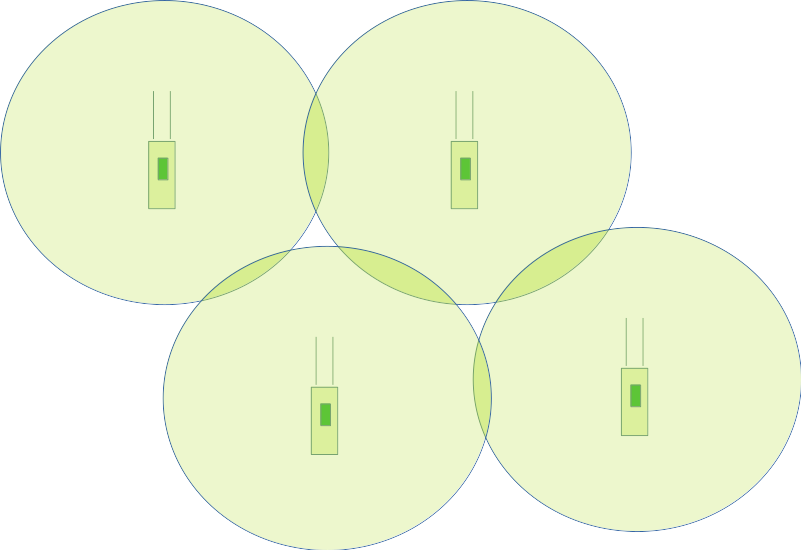
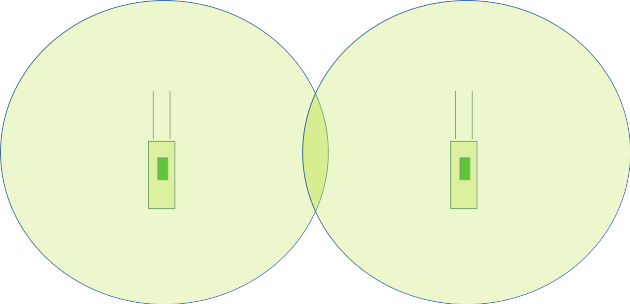
Know About Networks and Routers (probably…)” slideshow to help folks understand how to use their networks, which sometimes helped. Getting people to follow the directions (“Yes, the Hubs need to be AT LEAST half a mile apart if they’re going to work well”) remained a challenge.
By far my most common problem and biggest disappointment was Ethernet cables. I cannot express how much I came to despise bad Ethernet cables. They caused an endless stream of problems – the customer would complain their Hub was not working, but worked fine when it was brought down and connected to the power supply with a short cable. There are people who sell cheap “CCA” (Copper-Clad Aluminum) Ethernet cables (and other poorly-made cables) on Amazon, and I want to do terrible, terrible things to them.
But there were also other disappointments worth mentioning. First is the quality of the hardware we bought. We started out buying radios from Ubiquiti, which contracts manufacturing to several plants in China and supervises the manufacture of their products carefully. The hardware still failed from time to time, but they were generally good about replacing it. When Ubiquiti got in trouble and exited the “OEM” business, we were forced to buy radios from other vendors. Some had higher quality than others, but it was clear that no one was sending us their best units. We caught a lot of problems with the radios we purchased, but there were some cases where we got units that didn’t fail until they were out on the field. That was both expensive to fix and damaging to our reputation. But, of course, we were always the “small fish in a big pond,” so we were unable to dictate any terms to the manufacturers.
Finally, there’s “Bill’s Law of technology products;” after 40 years of this, I’m confident I’m right when I say, “Building good technology products is hard. Marketing technology products is very, very hard.” We thought it would be easier because we were marketing to a readily-identifiable subsection of the population: the 30 million or so rural residents of the U.S. and, particularly, the 3 million or so farmers. Since the market is small, even at higher “CPM” (Cost per thousand impressions) we could reach that limited audience with our marketing messages at a cost we could afford. In theory, it’s a good strategy for a small company: focus on a “niche” and dominate it.
Of course, we needed to advertise. Putting ads in the ag mags was an easy matter, of course, but the response from those ads was not nearly enough to pay for the advertising. We quickly realized that tiny ads in the back of the magazines actually “pulled” better than bigger ads in the main copy, which was interesting, but the magazines just don’t sell things any more – you have to be online, of course.
So we had to use Google ads – Meta (Facebook and Instagram) has grown in the last few years, and Microsoft has made some inroads, but, especially when we started, there was no way to reach a significant audience without Google ads. And Google ads has always been a big, opaque black box into which you shovel money and hope for the best. I have talked to “experts” in Google ads multiple times, but I have never found a way to narrow down the reach to exactly the people we were trying to reach, and, thus, we were seldom able to advertise effectively to our target audience at a cost we could afford. We were always spending much more on advertising than was justified by our revenues, so we were always living on the tiniest margins because of that advertising cost.
There are undoubtedly people out there with better online advertising skills who might be able to do what I was never able to do (consistently). Our social media presence was also generally weak. We had a social media manager for a while, and that helped a lot, but good social media is much like good PR: it’s a lot of work, and it requires dedicated resources. Again, someone could probably do a much better job on social media, and it would help bring the “Cost of Customer Acquisition” down.
But I’m old, and fighting these several battles simultaneously has tired me out. I don’t have the burning desire to break through these barriers any more. I had hoped that someone with more talent in some or all of these areas would take over Ayrstone and drive it forward. No such person has appeared, so we’re moving toward liquidating the business.
To be clear, if I wasn’t earlier: I still believe in the value of Ayrstone’s mission. I’d love to be able to expand that mission from just the WiFi “infrastructure” to more “IOT” devices and, thereby, into farm automation. When autonomous farm equipment becomes a reality on American farms, I still believe meshing WiFi will be the right solution for Machine to Machine (“M2M”) communications. I’m just not able to commit to making all that happen any more.
I’ll be happy to provide advice and assistance to anyone who wants to take up this mantle and bring good outdoor WiFi to the agricultural market, although my first piece of advice would be, “acquire Ayrstone’s Intellectual Property.” If you are interested, or know someone who is, I’m easy to find on LinkedIn.
Farewell, I truly wish you well
This is the last you’ll hear from me. My current plan is to quietly retire – into the mountains, pack on my back, dog at my side – and back to my workshop. I’m still a geek at heart, so I’ll still be playing with technology; if I find something interesting, I’ll try to let you know (perhaps on FarmHack or somewhere like that).
Thank you all for 16 great years with Ayrstone. It has been a privilege to serve you.
-Bill Moffitt, “President Emeritus” of Ayrstone Productivity, LLC.